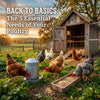
Back to Basics: The 5 Essential Needs of Your Poultry
8 min reading time
8 min reading time
⏱️ Reading Time: 9 minutes
Starting your journey with backyard chickens is one of the most rewarding things you can do for your family. There’s nothing quite like the sound of a happy cluck in the morning or the vibrant, orange glow of a homegrown egg yolk. However, if you’ve spent any time browsing the internet lately, it’s easy to feel like you need a Ph.D. in poultry science and a bank account the size of Texas just to get started. Here at Wise County Chicken Farm, we like to keep things simple.
Raising healthy birds doesn’t require expensive gadgets; it requires a solid understanding of the fundamentals. Whether you are bringing home your very first batch of chicks or you’re a seasoned pro looking to refresh your routine, success always comes back to the "Big Five." In this guide, we’re going to walk through the essential pillars of poultry care: water, feed, shelter, security, and space. Master these, and your flock will thrive.
If there is one thing a chicken cannot live without for even a short period, it’s water. Water is the silent engine behind every biological function in a bird's body. It aids in digestion, regulates body temperature, and is a primary component of egg production (after all, an egg is about 75% water!).
In our hot Texas climate, hydration is a matter of life and death. Chickens don’t have sweat glands; instead, they cool themselves by panting, an evaporative process that uses up a lot of internal moisture. If a hen goes without water for just a few hours on a blistering July afternoon, her egg production can shut down for weeks, or worse, she could suffer from heatstroke.

Feeding chickens seems straightforward, but it’s where I see the most mistakes made. A common trap new owners fall into is treating their chickens like "feathered garbage disposals." While they do love kitchen scraps, their primary source of nutrition must be a high-quality, balanced commercial feed.
Your birds have specific requirements for proteins, carbohydrates, fats, vitamins, and minerals. For example, a laying hen needs significantly more calcium than a young pullet to produce those strong, "rubbery-then-hard" eggshells we all love. Using the right feed and supplements ensures they aren't just surviving, but thriving.
This is a point we really want to drive home: Treats should ONLY make up 5% to 10% of their total diet.
Think of it this way: for a grown hen, that equates to roughly 1/2 tablespoon of treats per day. I know, I know, it’s hard to say no when they run to the gate to see you! But when we over-indulge them with scratch grains, bread, or even healthy veggies, we are "diluting" their basic feed requirements. This leads to vitamin deficiencies, obesity, and a drop in egg production. Stick to the basics first, and use the Mile Four quality grains as a supplement, not a replacement.
Your chickens need a place to retreat from the elements. A good coop serves three main purposes: it keeps them dry, provides a place to lay eggs, and offers a safe spot to sleep.
In Texas, the biggest mistake people make with shelter is underestimating the need for ventilation. A coop shouldn't be an airtight box; it needs to breathe. Chickens produce a surprising amount of moisture through their breath and their droppings (which are high in ammonia). Without proper airflow, that moisture builds up, leading to respiratory issues and "stuffy" air that can be toxic to the birds.
If you’re looking for a "plug-and-play" solution that handles all of this perfectly, we highly recommend the OverEZ® Chicken Coops. They are built with the bird's comfort in mind and take the guesswork out of construction.

Everything likes the taste of chicken. From neighborhood dogs and stray cats to crafty raccoons, hawks, and opossums, the list of predators is long. Security is about more than just a locked door; it’s about creating a "predator-proof" environment.
The golden rule of chicken security is Hardware Cloth over Chicken Wire. Despite its name, chicken wire is actually pretty terrible at keeping predators out. It’s designed to keep chickens in, but a determined raccoon can rip through it, and a weasel can squeeze through the holes. Use 1/2-inch galvanized hardware cloth instead.
Crowded chickens are stressed chickens. When birds are forced into too small a space, they begin to develop bad habits like feather picking and "hen-pecking" each other. Space allows for a natural social hierarchy to form without constant conflict.
As a general rule of thumb:
If you have the ability to let them free-range during the day, that’s even better! Just remember that free-ranging increases the need for supervision and security. If you have a smaller backyard, providing "enrichment" like dust baths (a shallow hole filled with loose dirt and wood ash) or hanging heads of cabbage can help keep them occupied and happy in a confined space.

Raising poultry doesn't have to be a science experiment. If you provide fresh water, a balanced diet (with very few treats!), a ventilated shelter, top-tier security, and plenty of elbow room, you are 95% of the way there. The rest is just enjoying the companionship of your flock and the delicious rewards they provide.
We know that getting started can bring up a lot of questions. Whether you're curious about exotic fowl or just need help picking out the right roosters for your flock, we are here to help.
Let us help you get off to the right start. If you ever find yourself stumped or just want to talk shop about your birds, feel free to contact us or swing by the farm. We’re more than just a supply shop, we’re your neighbors in this poultry journey.
Stay "clucky," y'all!
The Wise County Chicken Farm Family
Disclaimer: The information provided in this blog post is for educational purposes only and is based on general poultry care practices. While we strive for accuracy, individual bird health can vary. Always consult with a local veterinarian or an avian specialist if your poultry show signs of illness or distress. Wise County Chicken Farm is not responsible for any loss or injury resulting from the use of this information. Please check your local city and HOA ordinances regarding the keeping of backyard poultry.


