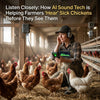
Listen Closely: How AI Sound Tech is Helping Farmers "Hear" Sick Chickens Before They See Them
7 min reading time
7 min reading time
Reading Time: 8 minutes
Artificial Intelligence (AI) isn't just for writing emails or generating art anymore; it’s officially moved into the coop. In this post, we’re diving into the cutting-edge world of acoustic sensors and sound-based diagnostics. You’ll learn how commercial farms are using machine learning to detect respiratory distress and stress patterns days or even weeks before physical symptoms appear, and how these "high-tech ears" are beginning to find a home in high-end backyard setups.
Hey there, neighbors! I If you’ve spent any amount of time around a flock, you know that chickens are a chatty bunch. From the soft, rhythmic "buk-buk" of a hen finding a tasty bug to the loud, triumphant egg song, our birds are always talking to us. 🐔
But here’s the thing: as much as we love our birds, we’re only human. We can’t be in the coop 24/7, and by the time we see a chicken looking hunched, lethargic, or having a vibrant comb turn pale, the illness is often well-established. In the poultry world, there’s an old saying: "A sick chicken is a dead chicken." That’s because they are masters of hiding their symptoms until it’s almost too late.
But what if we could hear the sickness before we could see it? That’s exactly what’s happening right now in the world of commercial poultry technology, and the "trickle-down" to our backyard flocks is closer than you think.
Commercial poultry giants have been working with tech companies like AudioT and SoundTalks to develop systems that act like a "baby monitor on steroids." These systems use high-sensitivity microphones placed throughout a poultry house to record the ambient noise of thousands of birds.
Now, to you or me, it might just sound like a wall of noise. But to an AI trained on millions of data points, that noise is full of information. Every sneeze, every "rattle," and every change in the pitch of a cluck has a specific acoustic fingerprint.

The AI doesn't just record sound; it analyzes the frequency, duration, and rhythm of vocalizations.
One of the most exciting breakthroughs in this tech is the ability to detect respiratory distress with incredible accuracy. Research has shown that AI models can identify Newcastle disease and Avian Influenza with upwards of 97% to 98% accuracy just by analyzing sound waves.
In many cases, the sensors picked up on respiratory rales (that rattling sound in the throat) up to 30 days before the birds showed enough physical lethargy for a human farmer to notice something was wrong.
Why this matters for you:
Even if you aren't running a 50,000-bird house, respiratory issues are the bane of any chicken keeper's existence. In our humid Texas weather, things like Mycoplasma or simple bronchitis can sweep through a flock fast. Catching it early means you can start supportive care: like using Merrick's Blue Ribbon Poultry Electrolytes or Acidified Copper Sulfate: long before you're dealing with a full-blown crisis.

It’s not just about sickness. This tech is also being used to monitor animal welfare.
You might be thinking, "Penny, I have six hens and a rooster named Carl. I’m not buying an industrial AI server."
That’s fair! But we are already seeing this technology shrink. Smart coop systems are now hitting the market that include integrated cameras and microphones. Some high-end "Smart Coops" are beginning to offer app-based alerts that notify you if your hens are making "unusual vocalizations" overnight.
Think of it like the transition of the Solar Auto Door. A few years ago, an automatic door was a fancy luxury for big operations. Now, our Premium Solar Door is one of the most popular upgrades for backyard keepers because it adds a layer of tech-driven safety that just makes life easier. Sound tech is the next frontier.

You don't need a supercomputer to start "hearing" your birds better. Here is how you can use the principles of AI sound tech today:
If your "ears" (AI or human) tell you something is wrong, don't panic. Speed is your best friend.
💡 Bottom Line: AI sound technology is proving that chickens "tell" us they are sick long before they "show" us. By paying closer attention to the vocal patterns of our birds, we can provide better care and save more lives.
Medical Disclaimer: The information provided in this blog post is for educational purposes only and is not a substitute for professional veterinary advice, diagnosis, or treatment. Always seek the advice of a qualified poultry veterinarian with any questions you may have regarding a medical condition for your flock.
It’s an exciting time to be in the chicken business, y'all. Whether we’re using the latest AI sensors or just our own two ears, the goal is the same: keeping our feathered friends happy, healthy, and singing their best songs. If you’re looking to add some fresh voices to your coop, come see our French Pearl Guineas or our beautiful Golden Laced Wyandotte Day Old Chicks.
Stay curious and keep listening!
Warmly,
The Wise County Chicken Farm Family 🌻


